Poynings · West Sussex
✦
Poynings · West Sussex

Welcome! This website has been put together by Downmere’s current owners to celebrate and share the rich history of the home which they cherish.
Nestled beneath the South Downs in the ancient village of Poynings, Downmere stands upon land that has been inhabited, farmed, fished and loved since at least the Norman Conquest. The property’s lake — fed by the chalk aquifer beneath the Downs — was already noted as a pleasure garden belonging to the de Poynings family in 1339. Today its stream, ornamental lake, terraced lawns and mature specimen trees form one of West Sussex’s most tranquil private gardens.
The present buildings were begun in 1908 by Charles Heath Clark, a pioneering tea merchant, and extended before the First World War in the Arts & Crafts manner. The Gatehouse’s clock tower — whose clock was made by the Croydon firm Gillett & Johnston, makers of clocks for Sydney Town Hall and St James’s Palace — has marked the hours in Poynings for over a century.
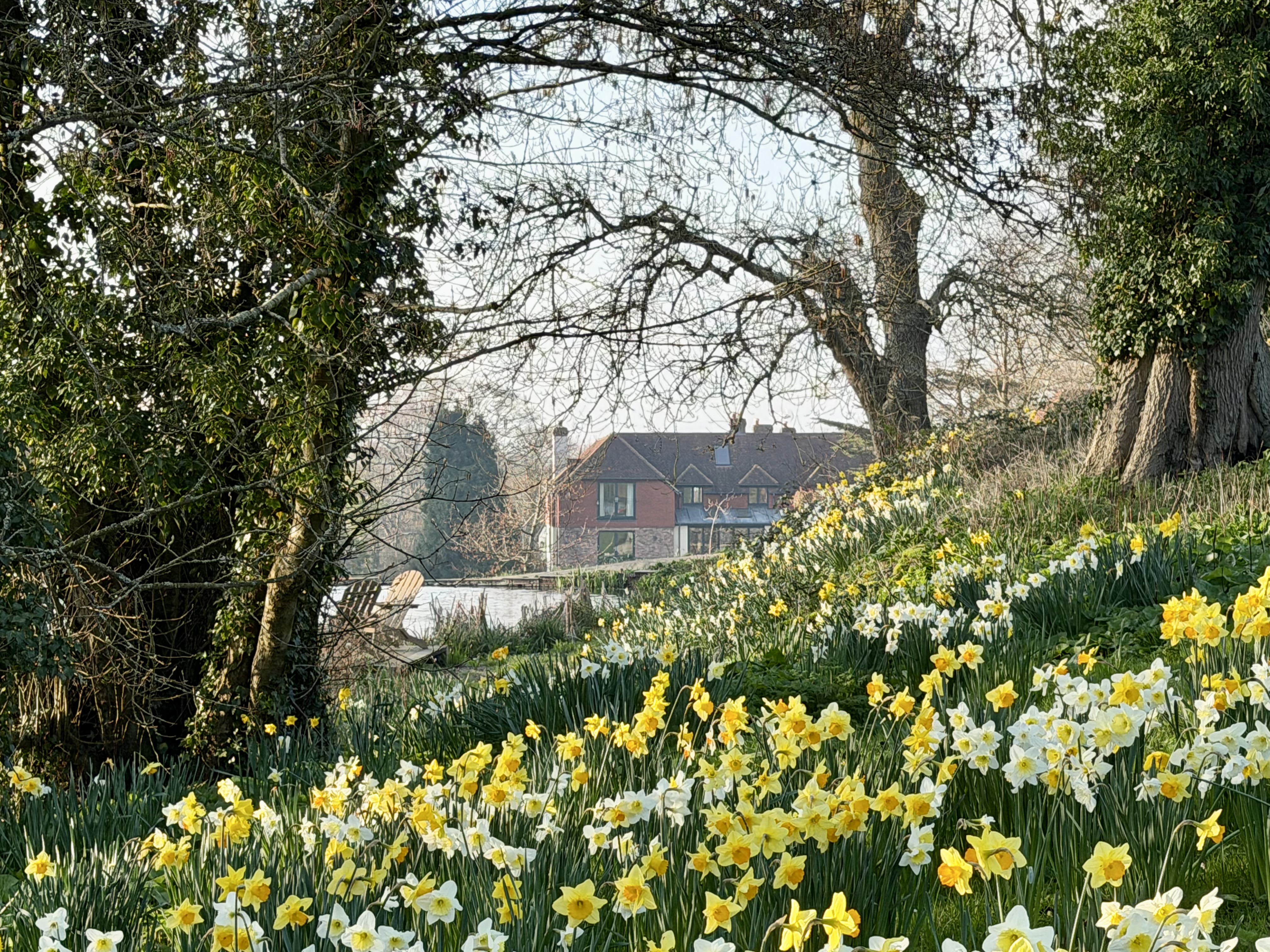 Daffodils at the water’s edge — spring 2026
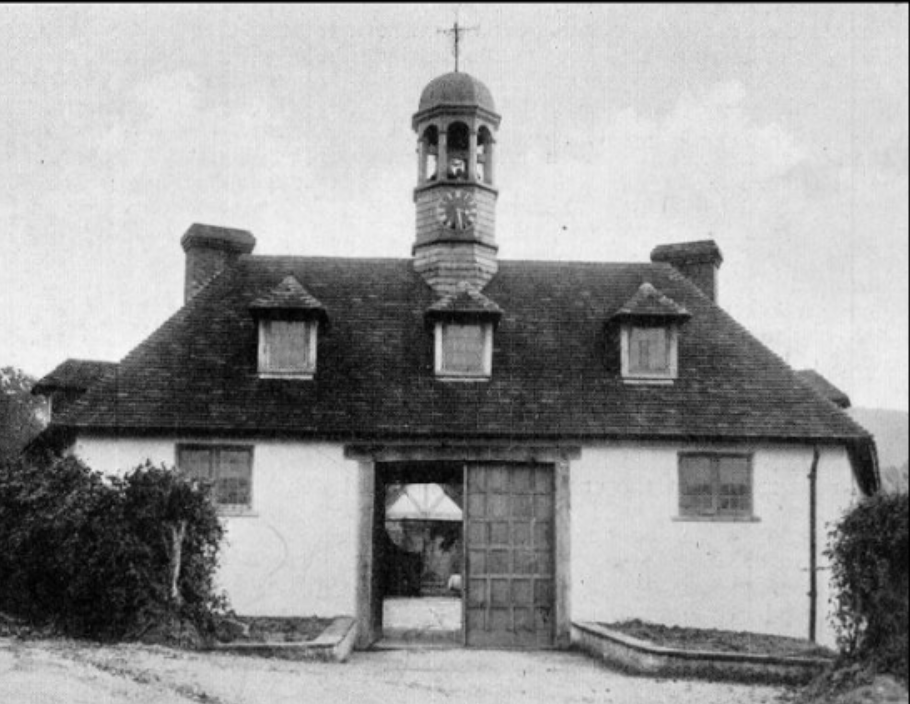 The Gatehouse and its Arts & Crafts clock tower, built c.1913
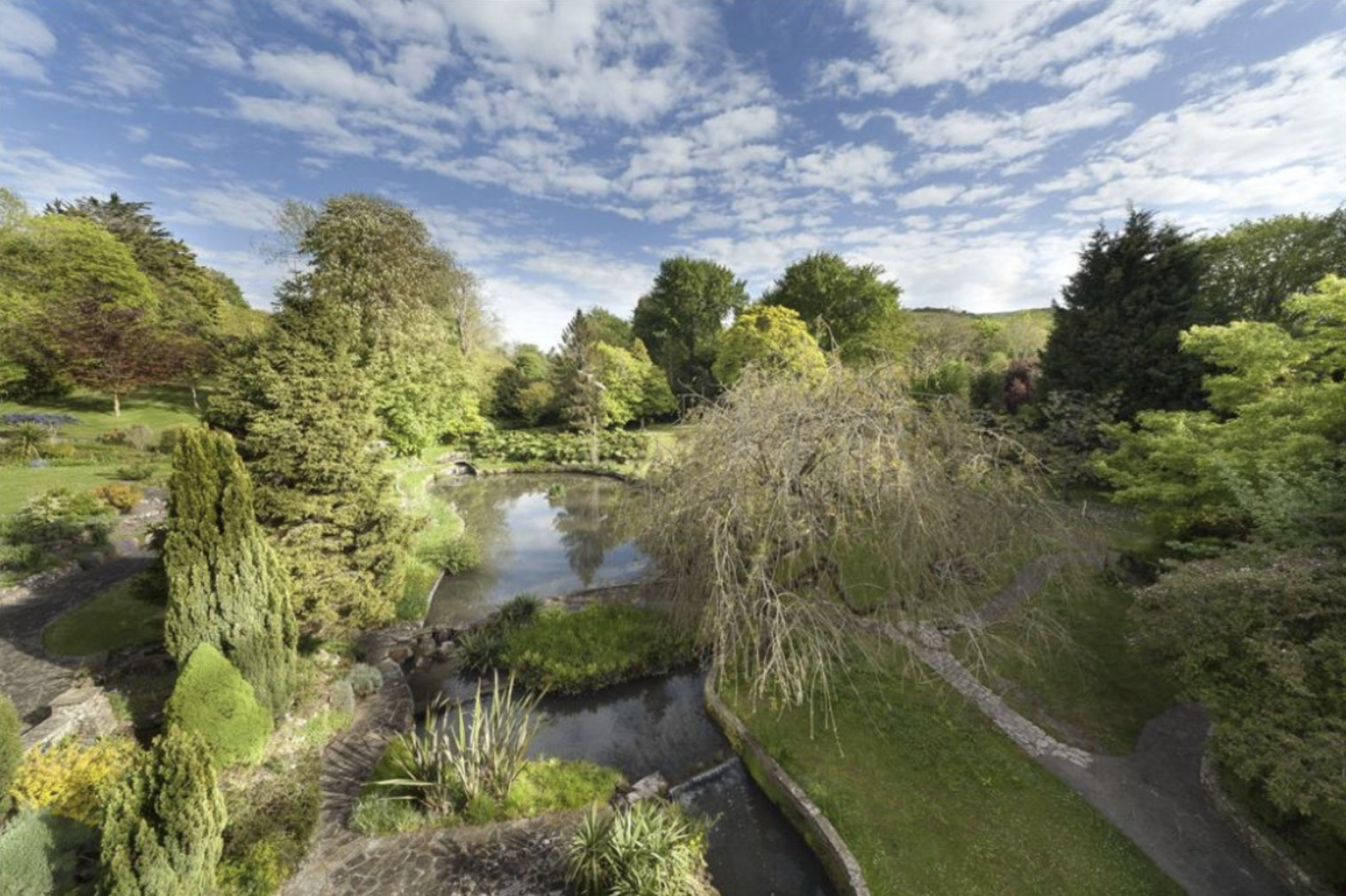 The grounds in late spring
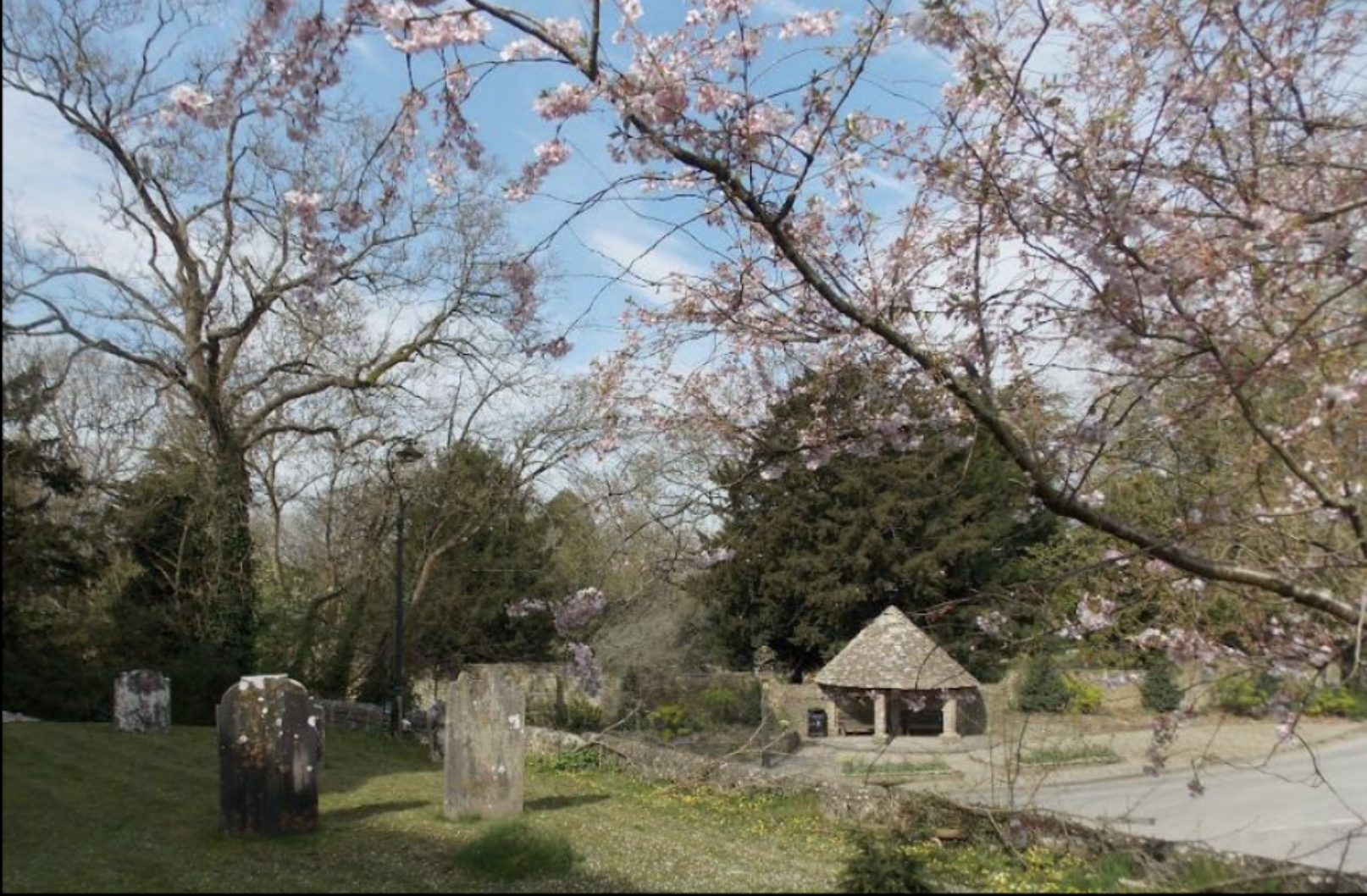 Cora’s Corner — the stone shelter gifted to the village by Sir Emile Littler in the 1950s
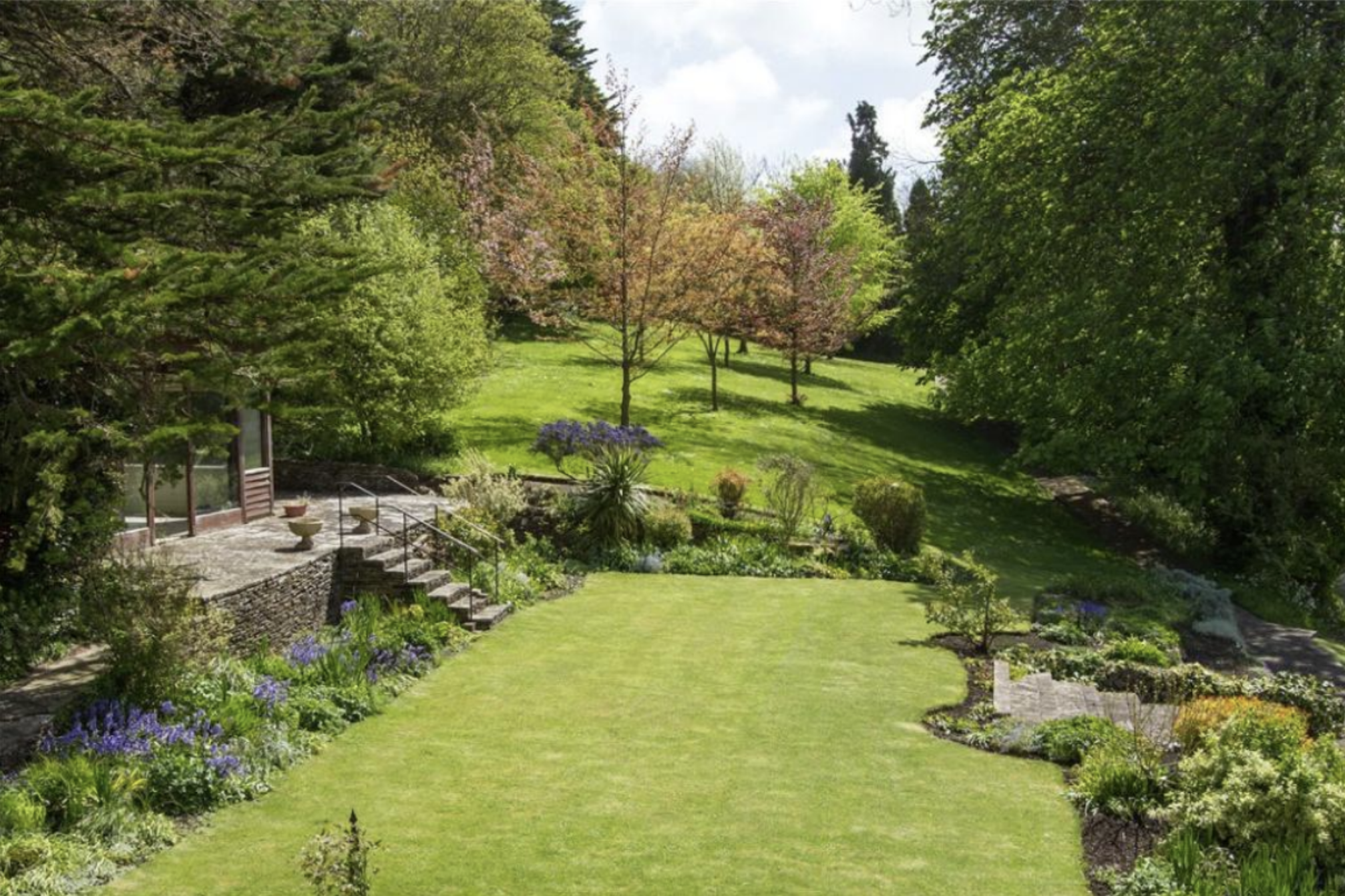 The upper lawns and specimen trees
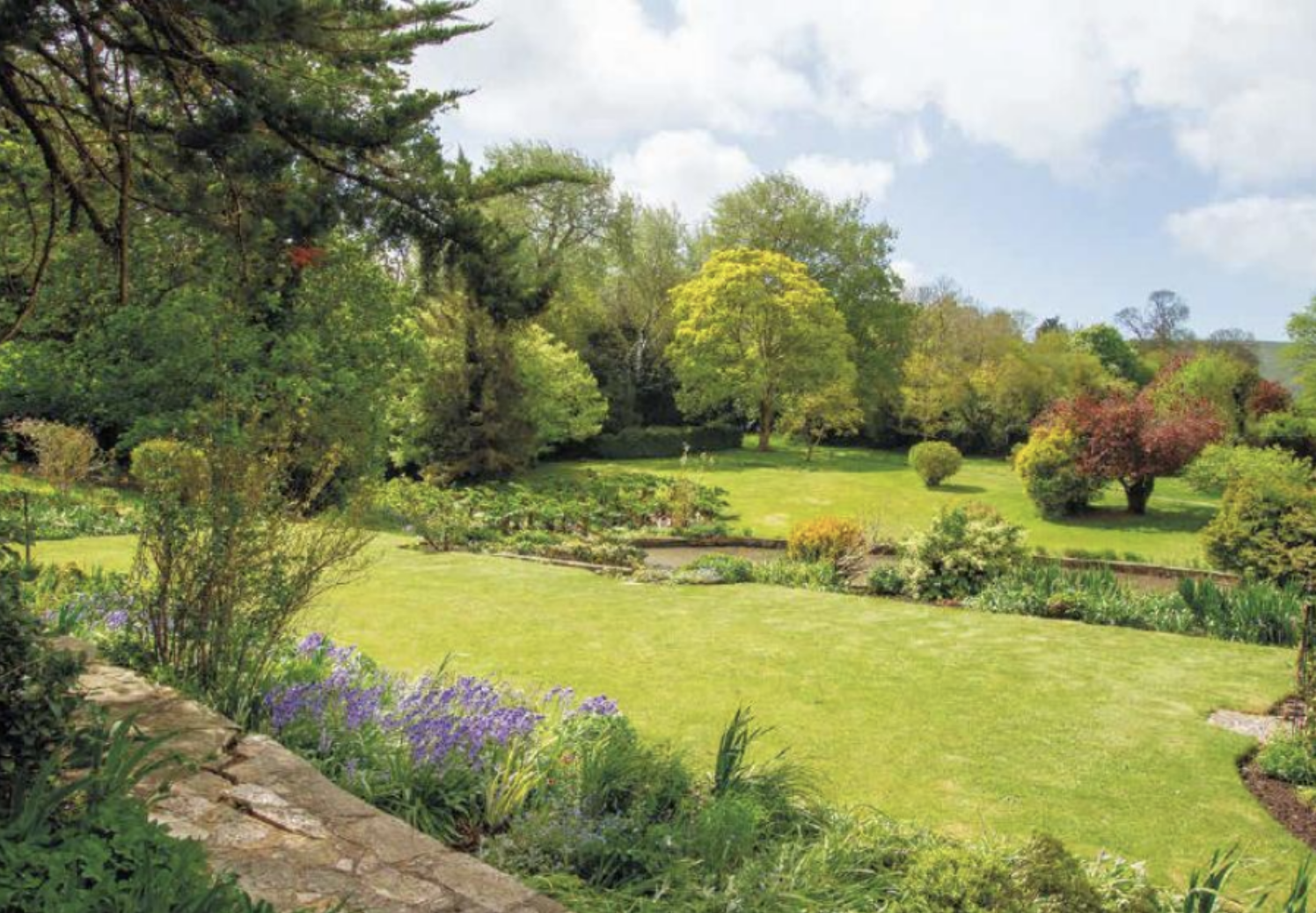 The terraced lawns looking south towards the Downs
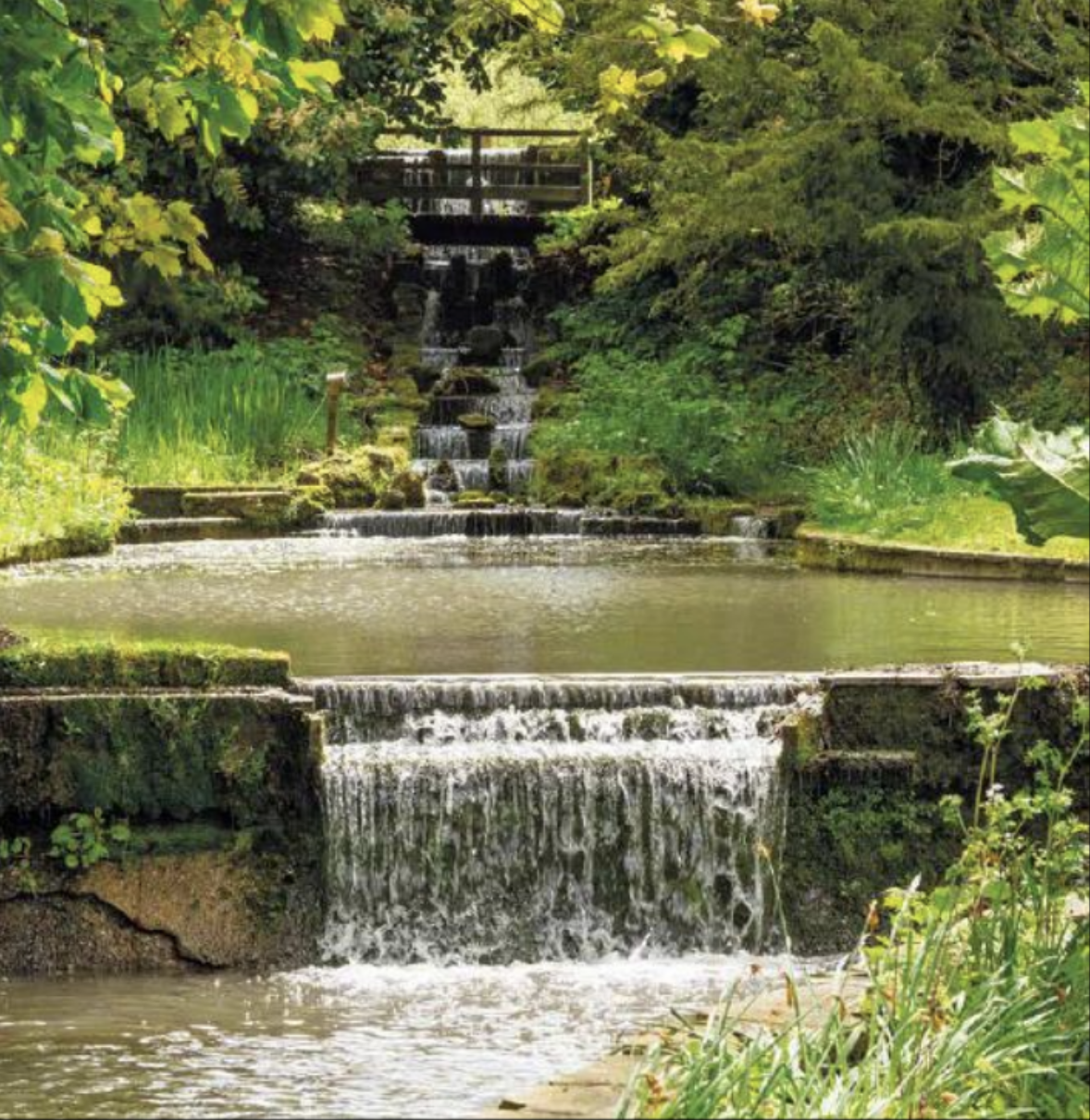 The stream and waterfall running through the gardens
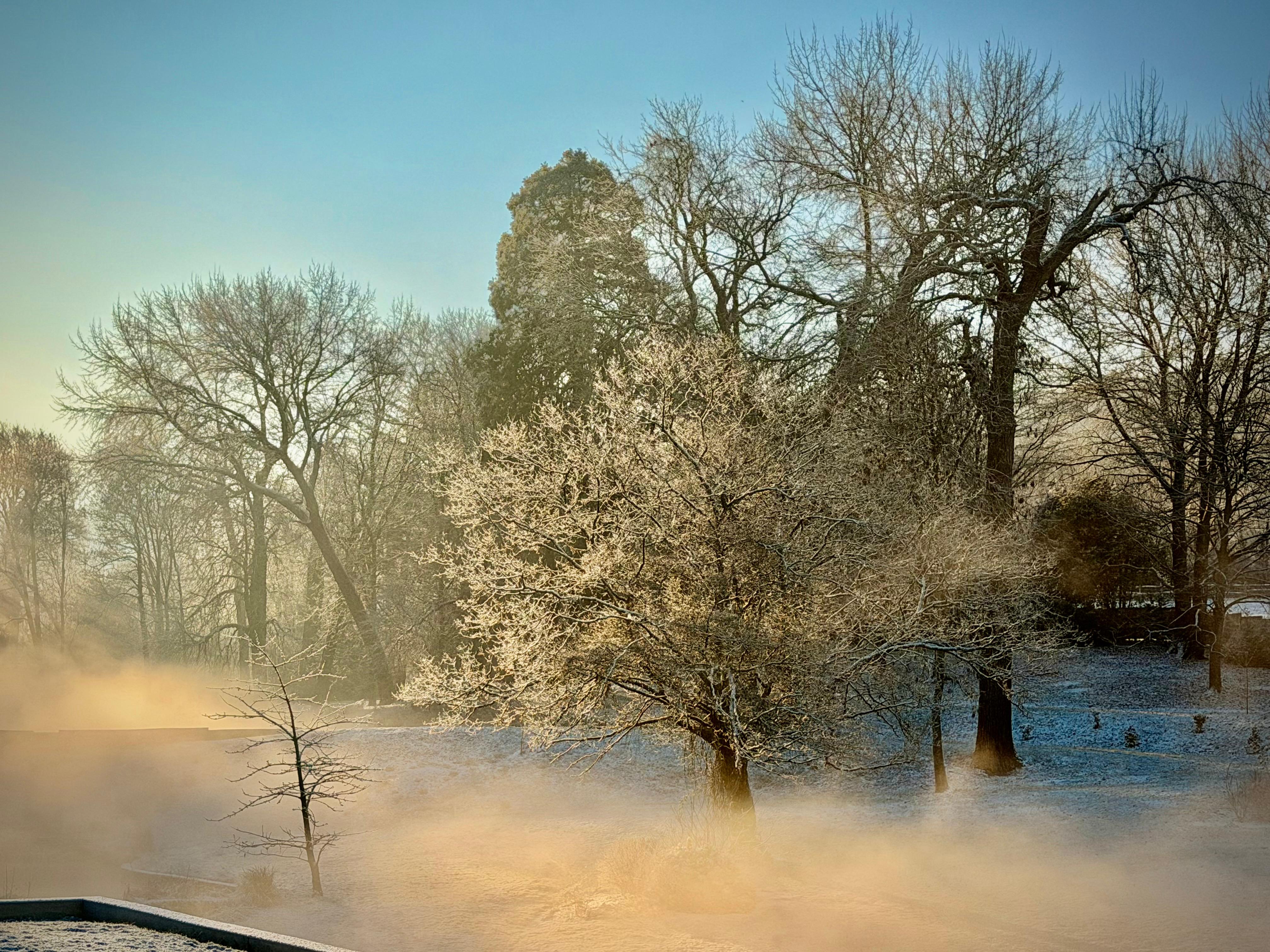 Downmere in winter
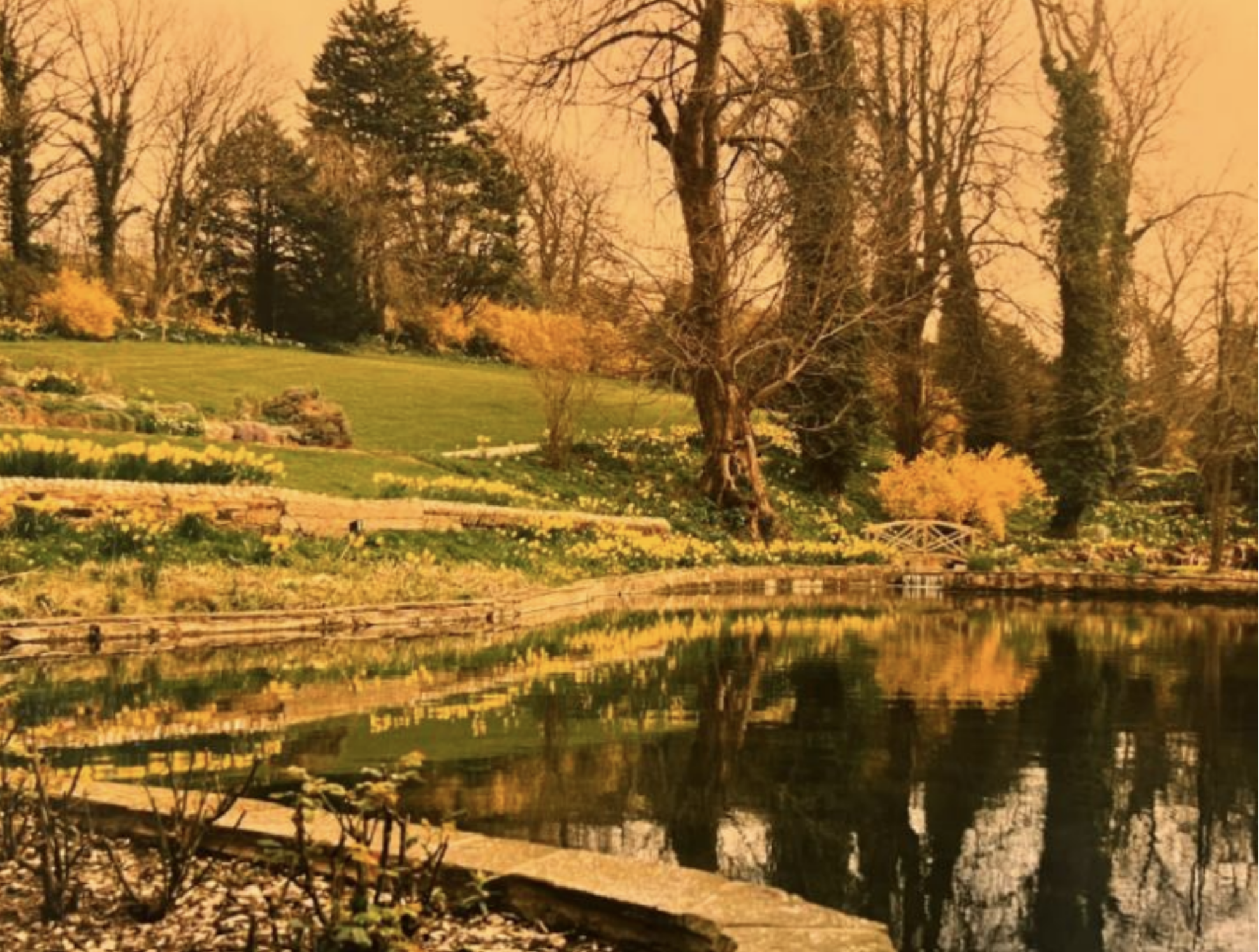 Spring daffodils in the grounds
Its terraced garden, its depth of woods, its breezy downs, its never failing brook which, then embanked into a succession of fishponds, ran sparkling in its lively course through the ever verdant meadows. Sussex History, 1863 — describing the lands of Downmere
Downmere lies in the village of Poynings, sheltered beneath the South Downs escarpment and the great chalk valley of Devil’s Dyke — five miles north of Brighton and within easy reach of London.
The village itself has been continuously inhabited since Saxon times and takes its name from an Old English settler called Pūna. Holy Trinity Church, whose tower watches over Downmere’s grounds, dates from 1370 and was rebuilt following bequests from Michael de Poynings himself.
Poynings is part of the South Downs National Park